
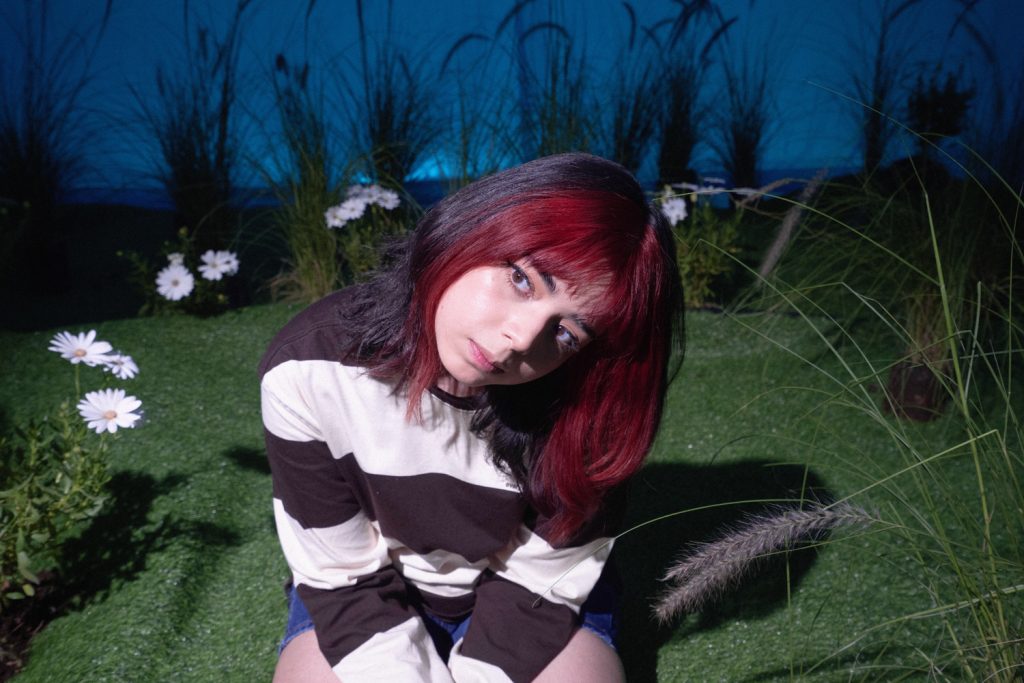
Bratty
On her newalbum TR3S,singer/songwriter BRATTY opens up about all that’s weighing on herheart: her anxieties and insecurities and deepest infatuations, thesingular pain of feeling too much, the strange disconnect of dealingwith seasonal depression in the summertime. In an evolution of theunguarded storytelling that’s made her one of the most compellingyoung artists to emerge in recent years, the 23-year-old Mexiconative sets that introspection to a bright and dreamy form ofindie-pop/surf-rock, lit up in her sweetly disarming vocal work andeffervescent melodies. The latest triumph in a breakout year that’sincluded making her U.S. debut with a much-celebrated set atCoachella, TR3S ultimatelyfinds an unlikely power in absolute sensitivity.Namedfor her lucky number, BRATTY’s third full-length expands on thegraceful musicality she first began honing by self-recording songs inher bedroom at age 16. In bringing the 12-song album to life, theself-taughtmulti-instrumentalist worked with producer JuliánBernal (a Latin Grammy Award winner known for his work with artistslike Cuco and Elsa y Elmar), shaping a more elaborate sound whileembracing a certain unbridled freedom in the creative process.“Julián really helped me to challenge myself with my vocals andguitar-playing, but at the same time the main focus of the wholealbum was to have fun and be true to myself,” says BRATTY,otherwise known as Jenny Juárez. “With my last record Ioverthought everything: what I was going to write about, how toexpress it in a way that people could relate to and identify with.This time I just wanted to get back to doing what felt right, like Idid when I first started this project.”Thefollow-up to EsMi Fiesta Y Si Quiero Hago Un—afive-song EP featuring guest spots from the likes of Spanishindie-rock band Hinds—TR3Sbrings BRATTY’s understatedyet captivating songwriting to tracks like the luminous lead single“EstosDías.” “That song came from writing and writing and getting outeverything I was feeling at the time,” Juárez recalls. “To meit’s about being trapped in some kind of loop, where the days go byand you feel like you can’t make any decisions to move your lifeforward. You’re looking around at everyone else, and wondering whyyou’re the only one who seems to feel stuck like that.” A perfectvessel for her heart-melting voice, “Estos Días” captures thatsense of isolation in its sparse guitar tones and spacey synthlines—then takes on a powerful intensity at the bridge, brieflytransforming into an exhilarating anthem.Likeonly the most gifted of pop songwriters, BRATTY possesses apreternatural talent for making sadness feel indelibly sweet. To thatend, the airy and lilting “Agosto” offers up a pensive meditationon the passing of time, arriving as an irresistibly summery pop songabout summer-specific heartache. “I know most people tend toexperience seasonal depression in the winter, but for me it alwayshappens in summer,” says Juárez. “My birthday is in August and Ialways get overwhelmed by that feeling of another year passing by,and it makes me so nostalgic.” An all-encompassing outlet for themost difficult emotions, TR3Salso examines the grief andconfusion of fading connection on “YaNo Es Lo Mismo”—a gloriously moody piece of new-wave-leaning pop,co-written by fellow Mexican singer/songwriter Billy Miamor. “Billyshowed me that song and I fell in love with this story of a watchinga relationship die and wanting to hold on so badly, so I asked him ifI could keep it,” says Juárez. Another track penned by Miamor, “LaÚltima Vez” unfolds in fuzzed-out riffs and frenetic textures asBRATTY channels the oddly addictive nature of obsession. “It’s asong about telling yourself that it’s the last time you’re goingto call someone, the last time you’re going to text them, the lasttime you’re going to stalk them on social media,” says Juárez.“But of course it’s never the last time, because you’re stillwaiting for them to come around.”ForJuárez, one of the most thrilling moments in the creation of TR3Stook place during the writing of “Radio,” a sublimely cathartictrack fueled by frenzied rhythms and explosive guitar riffs. “‘Radio’is definitely one of the songs that came from not worrying about whatanyone else would think,” she says. “It’s about how listeningto the radio makes me so depressed, because it’s always the samesongs by the same artists instead of something new and exciting. Butthen it’s also about my own intrusive thoughts and the self-doubtthat creeps in whenever I start thinking, ‘Well, if they’re notplaying my music on the radio, then maybe I’m doing somethingwrong.’” (The first song shared from TR3S,“Radio” immediately proved to be undeniably resonant, withConsequence highlighting the track as a “Song of the Week” andpraising it as “another delightful slice of sunny indie rock thathighlights her silky vocals and exquisite songwriting.”)Originallyfrom the northwestern Mexico city of Culiacán,Sinaloa, Juárezfirst explored her musical side at the age 11 by teaching herself toplay One Direction songs on piano. Within several years she’d alsotaken up guitar, mostly learning by ear with the occasional help ofYouTube tutorials. “No one ever taught me anything—I always hadthis great curiosity and wanted to learn everything myself,” shesays. Although she started out playing covers, Juárez soon tappedinto the lyrical skills she’d developed by writing poetry in herearly teens and began creating songs of her own, mining inspirationfrom female-fronted indie-pop acts Alvvays, Snail Mail, and BestCoast. “It meant a lot to me to see someone writing from a woman’spoint of view about growing up, falling in love, falling out of love,discovering yourself,” she notes.
Withher artist name nodding to an early Best Coast song, BRATTY made herdebut with TodoEstá Cambiando,a 2018 EP recorded entirely in her bedroom. “I learned how tosound-proof my room and made the beats myself and figured out how toget that surfy guitar sound that I loved,” she says. “I was soproud to make something bigger than just my voice and folky guitar.”The following year, BRATTY featured on the viral smash “Ropa deBazar” by Mexican singer/songwriter Ed Maverick and delivered herdebut album Delusión,then inked her deal with Universal Music Mexico. With her sophomorealbum tdbnreleased in 2021, BRATTY’s reach soon grew far beyond her homelandand led to such accolades as landing on Billboard’s “Latin& Spanish Artists to Watch in 2023” list. As she geared up toplay Coachella (earning recognition as the only Mexican-born artiston the 2023 lineup), BRATTY found herself hailed as a must-see act bymajor outlets like Entertainment Weekly, with the Los Angeles Timesanointing her Mexico’s “reigninggarage-pop queen.”Evenas her profile continues to rise, Juárez has stuck with theself-contained creative approach she first adopted as a DIY artist.“When I’m writing songs I prefer to be alone in my bedroom, withall the time I need,” she says. “It’s like when you’rewriting in your diary—you need to be completely connected toyourself and not worry about the outside world.” And in her liveshow, she aims to extend that sense of unfiltered intimacy to heraudience. “I always try to be as genuine as I can and make everyonefeel safe and secure,” she says. “I always tell them they don’thave to think about anything going on outside this room, and that allthat matters is what they’re feeling right now.”Bycreating space for listeners to fully experience and process theirmost complicated feelings—both live and on record—BRATTY hopes tocatalyze the same transcendent shift in perspective that sheunfailingly finds in the music she loves most. “When I listen to alot of my favorite artists, their songs make me feel like my life isa movie,” she says. “I’d love it if my music could help peoplefeel like they’re in their own little world, but also connected tosomeone who understands everything they’re going through. To methat’s the most magical thing about music: how you can so be faraway from a person physically, but still make them feel less alone.”